Need stump grinding help in Covington?
- Request an estimate in a few minutes
- Compare approaches before you decide
- Help with stumps and storm damage
- No obligation
No obligation
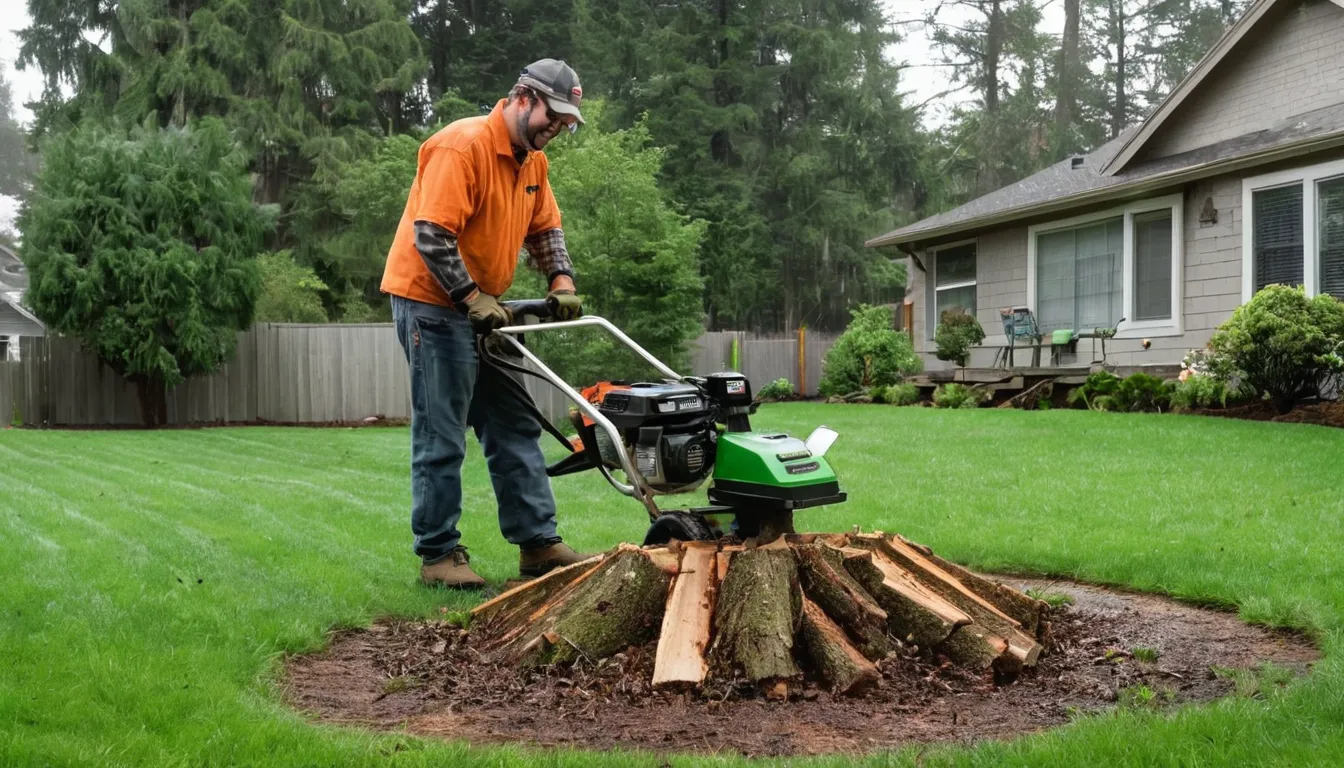
A stump left in the yard is like a cork stuck in the ground. It does nothing useful, but it gets in the way of mowing, planting and play. In a mild, rainy climate, it also soaks up water and slowly rots, which draws ants, fungus and other pests.
Advicepersonnel Tree Service is a referral service. We do not grind stumps ourselves. We connect homeowners in the Covington area with independent local providers in our network who do. You describe the stump, a provider gets back to you, and you compare the estimates at your own pace. There is no obligation, and you decide when you are ready.
An old stump looks harmless. Under the soil, though, the roots are still there. During a long wet season they hold water like a sponge left on a kitchen counter. Sooner or later that sponge turns soft and starts to smell.
The good news is that this is a small problem with a simple step. A stump is much easier to deal with before it spreads trouble.
Stumps hide in tall grass. Kids, guests and lawn mowers tend to find them the hard way. A stump cut low can be even sneakier than a tall one.
Damp, rotting wood is an open invitation for carpenter ants, termites and mushrooms. With wood-frame homes and crawl spaces common in rainy regions, a decaying stump close to the house deserves a closer look. Ask the provider to note how near it sits to your foundation.
Some trees send up new shoots from the stump for years. Roots can also drift toward pipes, paths and slabs. Grinding stops most of that growth at the source.
Think of a loose fence post. You can ignore it for a while, but you know it will give way eventually. Watch for these signs:
If you see two or more, it is a good time to request an estimate.
Picture a giant pencil sharpener. A grinder has a spinning wheel covered in hard carbide teeth. The provider rolls it up to the stump, lowers the wheel, and sweeps it side to side. Each pass shaves off thin layers of wood.
Most providers grind several inches below ground level, and deeper if you plan to plant there. What is left is a pile of wood chips mixed with soil.
The grinder deals with the stump and the thick roots near the top. Roots farther out are usually left in place to break down slowly. That is normal, and it rarely causes problems.
Grinding is like sanding a rough floorboard flat. Full removal is like pulling a tooth, root and all. Removal uses heavy equipment to dig out the stump and the root ball. It leaves a bigger hole, more disruption and usually a higher price.
Grinding fits most yards. Removal can make sense if you plan to pour concrete, set a footing, or the tree had a disease you want gone. Ask each provider to price both so you can compare.
Providers usually look at a few things before they quote:
Prices vary by job, so ask for a written quote and compare more than one.
Request a callback to check provider availability in your area.
A little prep is like clearing a table before dinner. It keeps things smooth.
Old stumps from a past removal or a windstorm cleanup are common. They are often softer, which can make grinding easier. But age brings surprises. Nails, wire, rocks and buried fence pieces can hide inside.
Think of an old fence post you want to pull. You never know what is down there until you start. Tell the provider what you know about the yard's history so they can plan around it.
The wood chips can be used as mulch in garden beds. Keep them a few inches away from siding and crawl space vents, since wet chips hold moisture against wood. Or ask the provider to haul them away.
You can fill the hole with a mix of chips and topsoil, then add grass seed or a new plant. Settling is normal, so top it off after the next few rains. If small shoots appear, snip them back early.
You do not need to choose on the spot. Describe the stump, read the estimates, and pick the one that makes sense. That is the whole idea behind Advicepersonnel Tree Service: less searching, more clarity.
Providers grind the stump below ground level and leave wood chips behind.
A provider can look at surface roots and tell you which ones need grinding.
Ask whether chips stay as mulch, get spread around the yard, or are hauled away.
Compare written estimates for grinding and full removal before you decide on anything.
These are typical U.S. ranges, and real prices vary by stump size, access and location. Use them as a starting point, and always ask for a written quote.
| Item | Typical range | Notes |
|---|---|---|
| Small stump (under 12 in.) | $100 – $250 | Easy access keeps the price lower |
| Medium stump (12 – 24 in.) | $200 – $450 | Most common yard stump |
| Large stump (over 24 in.) | $350 – $800 | Wide stumps take longer |
| Extra surface roots | $50 – $300 | Depends on how far they spread |
| Chip hauling | $50 – $200 | Optional if you keep the mulch |
| Full stump removal | $400 – $1,500 | Digs out stump and root ball |
Tell us the size, how many stumps there are, and where they sit in the yard.
An independent local provider reaches out to ask a few questions about the job.
Look at written quotes side by side, including cleanup and depth.
Pick the provider you like and set a time that works for you.
Describe your stump once and hear back from an independent local provider in the network.
Review more than one estimate and choose what fits.
Requesting an estimate carries no obligation, so you decide on your schedule.
Simple explanations help you ask the right questions before you agree to work.
Most single stumps take under an hour once the provider is on site. Large stumps, many roots or tight access can add time. The provider can give you a better idea when they review your photos or visit.
For most yards, grinding is simpler and less messy. Removal digs out the whole root ball, which helps if you plan to build or pour concrete. Ask providers to quote both so you can compare.
Yes, often. Grinding below ground level leaves room for soil and grass seed. For a new tree, ask the provider to grind deeper and remove most chips, since thick wood can rob young roots of nutrients.
Tell Advicepersonnel Tree Service about your tree and request an estimate. You can also request a callback to check provider availability. There is no obligation to hire anyone.
No obligation